

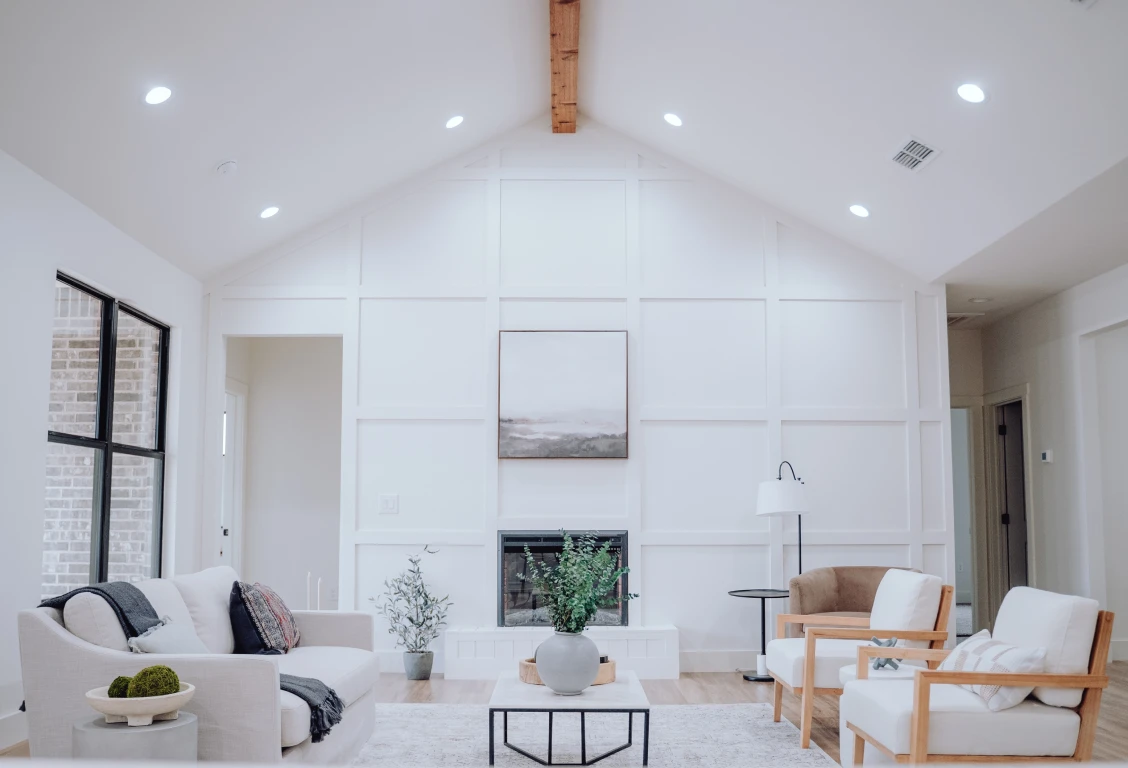
A vaulted ceiling can completely change the atmosphere of a home. Instead of stopping at a standard, flat height, the ceiling rises upward and creates a feeling of openness, height, and architectural character. It can make an ordinary living room feel dramatic, a kitchen feel brighter, and a compact space appear much more spacious.
For homeowners considering a renovation or new construction, a vaulted ceiling is more than a decorative feature. It can influence natural light, room proportions, ventilation, lighting choices, heating, and even the overall personality of the house. When planned carefully, it becomes one of those design details that makes a home feel memorable without relying on excessive decoration.
What Is a Vaulted Ceiling?
A vaulted ceiling is a ceiling that rises higher than a conventional flat ceiling and often follows the shape or slope of the roof. Unlike a traditional ceiling, which maintains a consistent horizontal surface, a vaulted design creates additional vertical space above the room.
The exact shape can vary. Some vaulted ceilings have two sloping sides that meet at a central ridge, while others use curved, angled, or asymmetrical forms. This flexibility makes vaulted ceilings suitable for many architectural styles, from rustic farmhouses and traditional homes to contemporary interiors.
The extra height naturally draws the eye upward. That simple change can give a room a more open and impressive appearance while providing an opportunity to introduce exposed beams, skylights, large windows, pendant lighting, or attractive wood paneling.
Why Do Homeowners Choose Vaulted Ceilings?
A More Spacious Feeling
One of the biggest attractions of a vaulted ceiling is the sense of space it creates. Even when the floor area remains exactly the same, additional vertical height can make the room feel considerably larger.
This effect is especially useful in living rooms, dining areas, entryways, and open-plan interiors where homeowners want an airy and welcoming atmosphere. Furniture can also feel less crowded when it sits beneath a high, visually open ceiling.
Better Use of Natural Light
A high ceiling often works beautifully with larger windows and clerestory windows. When combined with strategically placed glazing or skylights, the extra vertical space can help bring daylight deeper into an interior.
Natural light can make architectural details stand out and give neutral finishes a warmer, more attractive appearance. A vaulted ceiling paired with generous windows can also create a strong connection between indoor and outdoor spaces.
Strong Architectural Character
Flat ceilings are practical, but they do not always become a major feature of a room. A vaulted ceiling can serve as an architectural focal point on its own.
Wood beams, tongue-and-groove boards, recessed lighting, chandeliers, or contrasting ceiling finishes can make the overhead space feel intentional and distinctive. Even a simple white vaulted ceiling can provide enough drama to change the entire character of an interior.
Popular Types of Vaulted Ceilings
Cathedral Ceiling
A cathedral ceiling usually has two equal slopes that rise toward a central ridge. The symmetrical shape creates a classic and balanced appearance.
This style works particularly well in living rooms and great rooms because it emphasizes the width and height of the space. Exposed structural beams can make a cathedral ceiling especially attractive in traditional or rustic homes.
Barrel Vault
A barrel vault has a curved shape that resembles the inside of a barrel. Rather than creating two straight slopes, the ceiling forms a continuous arch.
This design can add softness and elegance to hallways, kitchens, dining rooms, and other areas where a more distinctive architectural statement is desired.
Shed Vault
A shed or single-slope vaulted ceiling rises in one direction instead of meeting at a central peak. Its clean geometry makes it a natural choice for modern and minimalist interiors.
Because the ceiling slopes consistently, it can also work well with tall windows positioned along the higher wall, creating a bright and contemporary living environment.
Groin or Coffered-Inspired Vaulted Designs
Some interiors combine vaulted geometry with decorative ceiling treatments to create greater depth and visual interest. These designs can be particularly effective in larger rooms where a completely plain vaulted surface might feel too expansive.
Where Does a Vaulted Ceiling Work Best?
Living Rooms
The living room is one of the most popular locations for a vaulted ceiling. The additional height gives the room a generous, comfortable feeling and provides space for a statement chandelier, tall windows, fireplace surround, or exposed timber.
In an open-concept home, a vaulted living room can also create a visual centerpiece that connects the kitchen, dining area, and family spaces.
Kitchens and Dining Areas
A vaulted kitchen can feel bright and inviting, particularly when the ceiling incorporates skylights or large windows. Pendant lights can be suspended at different heights to add warmth without making the room feel visually empty.
In dining spaces, a vaulted ceiling can also create a more formal or elegant atmosphere while giving the table and surrounding furniture enough breathing room.
Bedrooms
A vaulted bedroom can feel calm and luxurious without requiring elaborate decoration. Soft colors, natural wood, warm lighting, and simple furnishings can complement the height without overwhelming the room.
The key is maintaining balance. Because the ceiling already creates visual interest, the rest of the bedroom can remain relatively understated.
How to Make a Vaulted Ceiling Look Its Best
Use the Right Lighting
Lighting becomes especially important when the ceiling rises significantly above eye level. A small central fixture may disappear within the larger volume of the room.
Pendant lights, chandeliers, recessed fixtures, wall sconces, and strategically placed accent lighting can help illuminate the entire space. Layered lighting is particularly useful because it prevents the upper portion of the room from feeling dark or disconnected.
Add Warmth With Wood
Wood ceiling planks and exposed beams can soften the spaciousness of a vaulted room. Natural timber introduces texture and warmth while emphasizing the ceiling’s shape.
For a modern appearance, lighter wood tones can be paired with simple walls and minimalist furniture. Darker beams can create stronger contrast in farmhouse, rustic, or traditional interiors.
Think About Color Carefully
A bright white vaulted ceiling can maximize the feeling of openness and reflect natural light throughout the room. However, color does not have to be limited to white.
A warm neutral shade can make a tall room feel more intimate, while a darker ceiling can create a dramatic and sophisticated effect. The best choice depends on the amount of natural light, the size of the room, and the desired interior style.
What Are the Potential Drawbacks?
A vaulted ceiling looks impressive, but it is important to consider the practical side before committing to one.
Construction can be more complicated than installing a conventional flat ceiling, particularly when the existing roof structure needs to be modified. Depending on the design, this may increase labor, structural engineering, insulation, and material costs.
Heating and cooling also deserve attention. Warm air naturally rises, so a tall room may require thoughtful HVAC planning to maintain comfortable temperatures. Proper insulation, air sealing, ceiling fans, and appropriately designed heating and cooling systems can help manage the indoor environment.
Maintenance can be another consideration. Replacing light bulbs, cleaning high windows, painting, and repairing fixtures may require ladders or specialized equipment.
Is a Vaulted Ceiling Worth the Investment?
Whether a vaulted ceiling is worthwhile depends on the home, budget, climate, roof structure, and personal preferences. For homeowners who value architectural character and an open interior atmosphere, the visual impact can be substantial.
It can also make a home more distinctive to potential buyers. However, resale value should not be the only reason to choose one. A successful vaulted ceiling should first improve the way the space looks and feels while fitting naturally into the home’s overall architecture.
Before starting a renovation, it is wise to discuss structural requirements, insulation, ventilation, electrical work, and heating and cooling needs with qualified professionals. Good planning can prevent an attractive design from creating expensive problems later.
FAQs
Do vaulted ceilings make a room look bigger?
Yes. The added vertical height can create the visual impression of a larger, more open room.
Are vaulted ceilings expensive?
They can cost more than standard ceilings because of additional structural, insulation, finishing, and labor requirements.
Can a vaulted ceiling improve natural light?
Yes. The design can accommodate taller windows, clerestory windows, and skylights that bring more daylight indoors.
Are vaulted ceilings suitable for small rooms?
They can be, provided the proportions are carefully planned. Extra height may make a smaller room feel more open.
Can an existing ceiling be vaulted?
Sometimes. The possibility depends on the roof structure, attic space, building design, and structural requirements of the home.
Conclusion
A vaulted ceiling can turn an ordinary room into a memorable part of the home. Its extra height creates openness, enhances natural light, and offers opportunities for beautiful architectural details. Although it requires thoughtful planning and may involve higher construction and maintenance costs, the right design can deliver lasting visual and practical value. When form, function, lighting, and structure work together, a vaulted ceiling becomes much more than an impressive ceiling—it becomes part of the home’s identity.
