

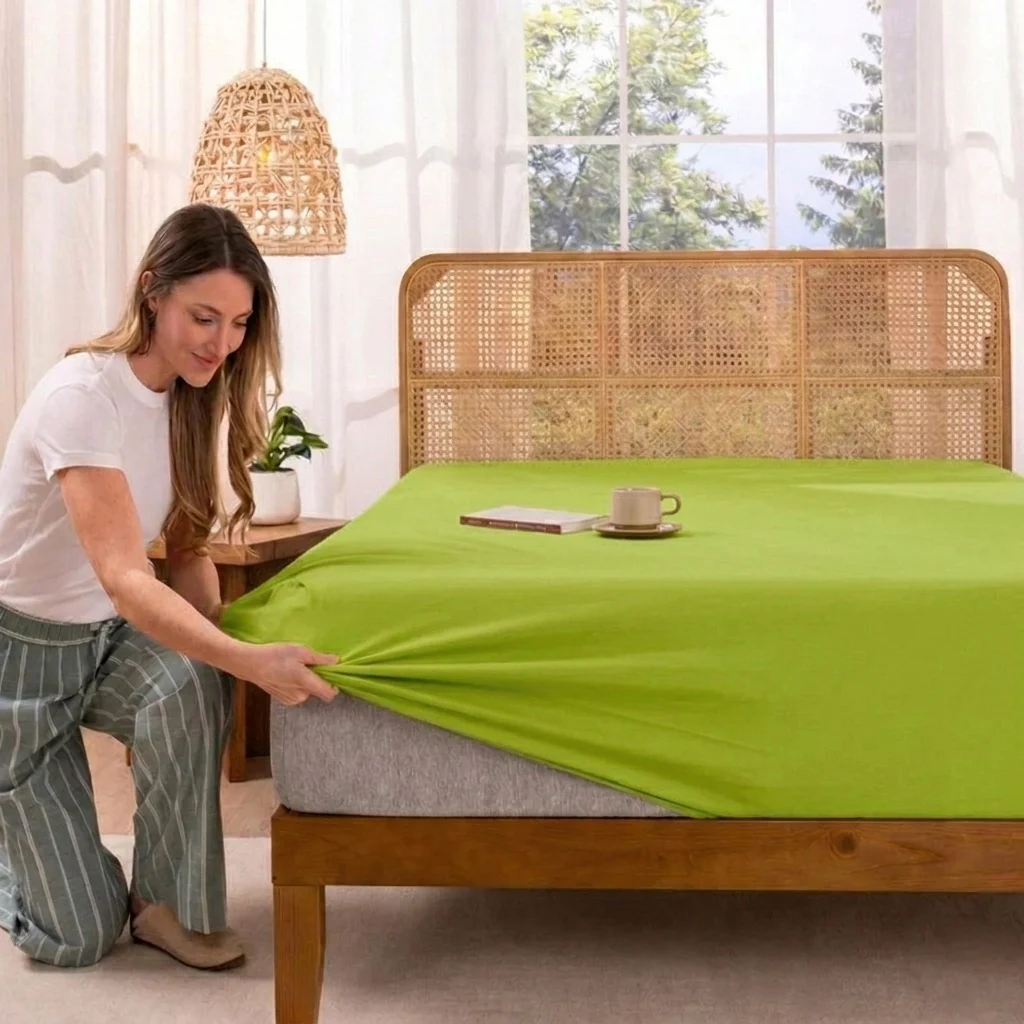
Buying the wrong fitted sheet is one of those small frustrations that ruins an otherwise lovely bed. It rides up in the night, pings off the corners, or simply won’t stretch over your mattress. If you’ve ever wrestled with an ill-fitting sheet at 11pm, you already know the problem and you’re not alone.
This guide walks you through everything you need to know about fitted sheets: sizes, materials, depths, thread counts and how to choose one that actually stays put. Whether you’re shopping for a cot, a single bed or a super king, we’ve covered the details competitors gloss over so you can buy once and buy right.
What Is a Fitted Sheet, Exactly?
A fitted sheet is a bed sheet with elasticated corners designed to wrap snugly around your mattress. Unlike a flat sheet, which sits loosely on top, a fitted sheet hugs the mattress on all four sides and the base, keeping it anchored to the bed frame.
- Prevents the sheet slipping during sleep
- Creates a smooth, wrinkle-free sleeping surface
- Protects your mattress from sweat, oils and general wear
- Works as the base layer beneath a duvet or top sheet
Most modern beds in the UK use fitted sheets as standard, replacing the older two-flat-sheet setup that was common decades ago.
Standard UK Fitted Sheet Sizes
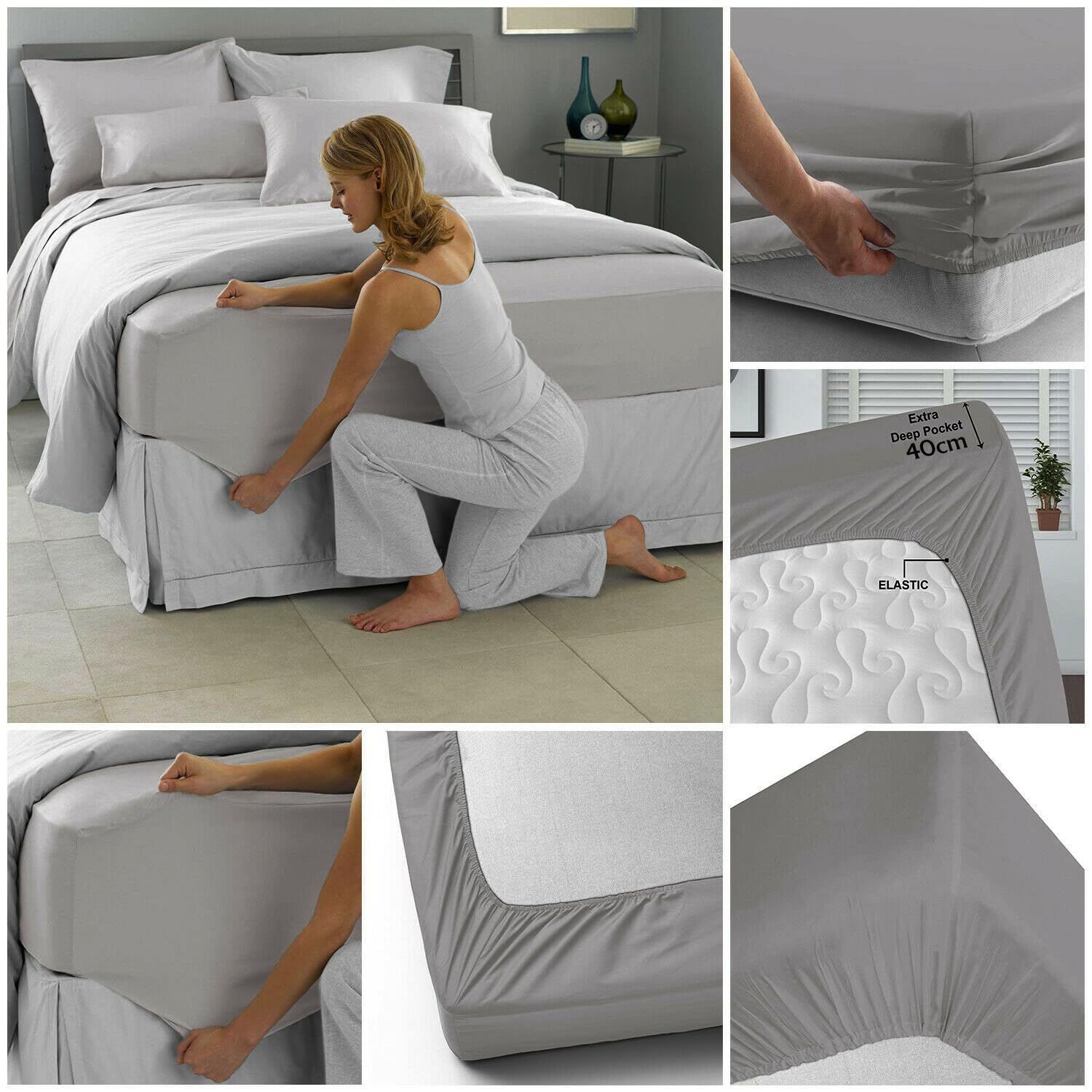
Getting the size wrong is the single biggest reason fitted sheets fail. UK mattress sizes differ from US and European sizing, so always check dimensions rather than relying on the name alone.
| Bed Size | Dimensions (cm) | Dimensions (inches) |
|---|---|---|
| Cot | 60 x 120 | 24 x 47 |
| Small Single | 75 x 190 | 30 x 75 |
| Single | 90 x 190 | 36 x 75 |
| Small Double | 120 x 190 | 48 x 75 |
| Double | 135 x 190 | 54 x 75 |
| King | 150 x 200 | 60 x 79 |
| Super King | 180 x 200 | 72 x 79 |
Tip: Always measure your existing mattress before ordering, especially with older beds or unusual frame shapes, as actual dimensions can vary by a few centimetres between manufacturers.
Why Mattress Depth Matters More Than You Think
Sheet size isn’t just about length and width depth (sometimes called “wall” or “skirt”) is just as important. This is the measurement from the top of the mattress down the side.
- Standard depth: 20–25cm, suited to traditional spring mattresses
- Deep fitted sheets: 30–35cm, designed for memory foam or pocket-sprung mattresses
- Extra-deep fitted sheets: 40cm+, needed for mattress toppers or orthopaedic mattresses
If your sheet is too shallow, it will pop off the corners within a night or two. If it’s too deep, you’ll get excess loose fabric bunching underneath you. When in doubt, size up rather than down.
Choosing the Right Fabric for Your Fitted Sheet
Material affects comfort, breathability, durability and price. Here’s how the main options compare.
Cotton
Cotton remains the most popular choice for good reason. It’s breathable, soft, and gets better with every wash. Egyptian cotton and Pima cotton sit at the premium end, while standard cotton percale offers excellent value.
Cotton Sateen
Sateen weave gives cotton a silky, lustrous finish with a slightly heavier drape. It feels luxurious against the skin but can be marginally less breathable than percale.
Linen
Linen fitted sheets are increasingly popular in the UK for their relaxed, textured look and exceptional temperature regulation cool in summer, warm in winter. They soften beautifully with age, though the crumpled aesthetic isn’t for everyone.
Microfibre and Polycotton
Budget-friendly and highly durable, these blends resist creasing and dry quickly. They’re a practical choice for children’s rooms, guest beds or frequent washing, though they don’t breathe as well as natural fibres.
Bamboo and Tencel
These eco-conscious fabrics are naturally moisture-wicking and hypoallergenic, making them ideal for sensitive skin or hot sleepers.
Understanding Thread Count (Without the Marketing Spin)
Thread count is often oversold. In reality:
- 180–200: Perfectly acceptable everyday quality
- 200–400: The sweet spot for softness and durability
- 400+: Diminishing returns; weave quality and fibre type matter more than the number alone
A well-woven 300-thread-count cotton sheet will usually outperform a poorly made 800-thread-count sheet padded out with cheap multi-ply yarns. Focus on fibre origin and weave type over the number printed on the packaging.
How to Measure Your Mattress Correctly

Before buying, take five minutes to measure properly:
- Measure the width at the widest point
- Measure the length from head to foot
- Measure the depth from the top surface straight down to the base
- Add 2–3cm to depth if you use a mattress protector underneath
- Check the label’s elastic type — all-round elastic holds better than corner-only elastic
Common Fitted Sheet Problems and How to Avoid Them
- Sheet keeps popping off: Usually a depth mismatch — size up to a deep-fit version
- Fabric pilling after washing: Often caused by high tumble-dryer heat on synthetic blends
- Colour fading quickly: Look for reactive-dyed cotton rather than pigment-dyed fabric
- Sheet feels too hot: Switch to linen, bamboo or a lower thread-count percale weave
- Corners tearing: A sign of weak elastic; choose sheets with reinforced elastic banding
Caring for Your Fitted Sheet to Extend Its Life
- Wash at 40°C for most cotton and linen blends unless the label states otherwise
- Avoid overloading the washing machine, which causes uneven wear on elastic
- Line-dry when possible to preserve fibre strength and elastic elasticity
- Rotate between two or three sheet sets to reduce wear from frequent washing
- Iron only if the fabric type recommends it — linen is traditionally left unironed
Sustainable and Ethical Fitted Sheet Options
Increasingly, UK shoppers are prioritising sustainability alongside comfort. Look out for:
- GOTS-certified organic cotton, grown without synthetic pesticides
- OEKO-TEX certification, confirming the fabric is free from harmful substances
- Fair Trade cotton, supporting ethical labour practices
- Recycled polyester blends, reducing textile waste
These certifications are usually listed clearly on product pages and are worth checking if sustainability influences your buying decision.
Fitted Sheet Trends in the UK Right Now

- Linen continues to grow in popularity for its relaxed, “lived-in” aesthetic
- Deep-fitting sheets are increasingly standard as memory foam mattresses become more common
- Colour palettes are shifting toward warm neutrals — terracotta, sage and clay tones
- More brands now sell sheets individually rather than only in matched bedding sets, giving buyers more flexibility on fit and fabric
Pros and Cons of Fitted Sheets
Pros:
- Stays securely in place throughout the night
- Quick and easy to fit compared with flat sheets
- Protects the mattress from spills, sweat and general wear
- Available in a wide range of fabrics and price points
Cons:
- Can be trickier to fold neatly for storage
- Elastic wears out over time and needs eventual replacement
- Sizing mismatches are common if depth isn’t checked carefully
- Slightly more expensive than flat sheets of equivalent quality
FAQ’s
Q1. What’s the difference between a deep fitted sheet and a standard one?
A standard fitted sheet suits mattresses up to about 25cm deep, while a deep-fitted sheet accommodates 30cm or more — ideal for memory foam or mattress toppers.
Q2. Can I use a double fitted sheet on a small double mattress?
No. Small double and double mattresses differ in width by 15cm, so the sheet won’t fit securely and will likely slip off during the night.
Q3. How often should I replace a fitted sheet?
Most fitted sheets last one to two years with regular use before the elastic loosens and fabric quality declines noticeably.
Conclusion
Choosing the right fitted sheet comes down to three things: accurate measurements, the right depth for your mattress, and a fabric that suits your comfort needs. Get those three right, and you’ll have a sheet that stays put, feels great, and lasts for years.
Ready to upgrade your bed? Measure your mattress today and compare fitted sheet options in the correct size and depth before you buy — your future well-rested self will thank you.
