

Weak, sputtering water pressure usually means one thing: your shower head is clogged with limescale, mineral buildup, or mold. If you’re searching for how to clean shower head vinegar, the fix is easier than you think — just white vinegar and a little time. Here’s everything you need to know, in one quick read.
Why Shower Heads Get Clogged
Hard water leaves behind calcium and mineral deposits every time you shower. Over time, these harden into a chalky crust that blocks the tiny nozzle holes, cutting water pressure and sometimes growing mold in damp corners.
Why Vinegar Works
White vinegar is a natural acid that dissolves limescale on contact — no scrubbing required.
- Non-toxic and safe for the whole family
- Dissolves rust, limescale, and soap scum
- Kills mold and mildew
- Costs almost nothing
- Already sitting in most kitchens
What You’ll Need
- White distilled vinegar
- A plastic bag or bowl
- Rubber band or twist tie
- Old toothbrush
- Microfiber cloth
Method 1: Fixed (Wall-Mounted) Shower Head
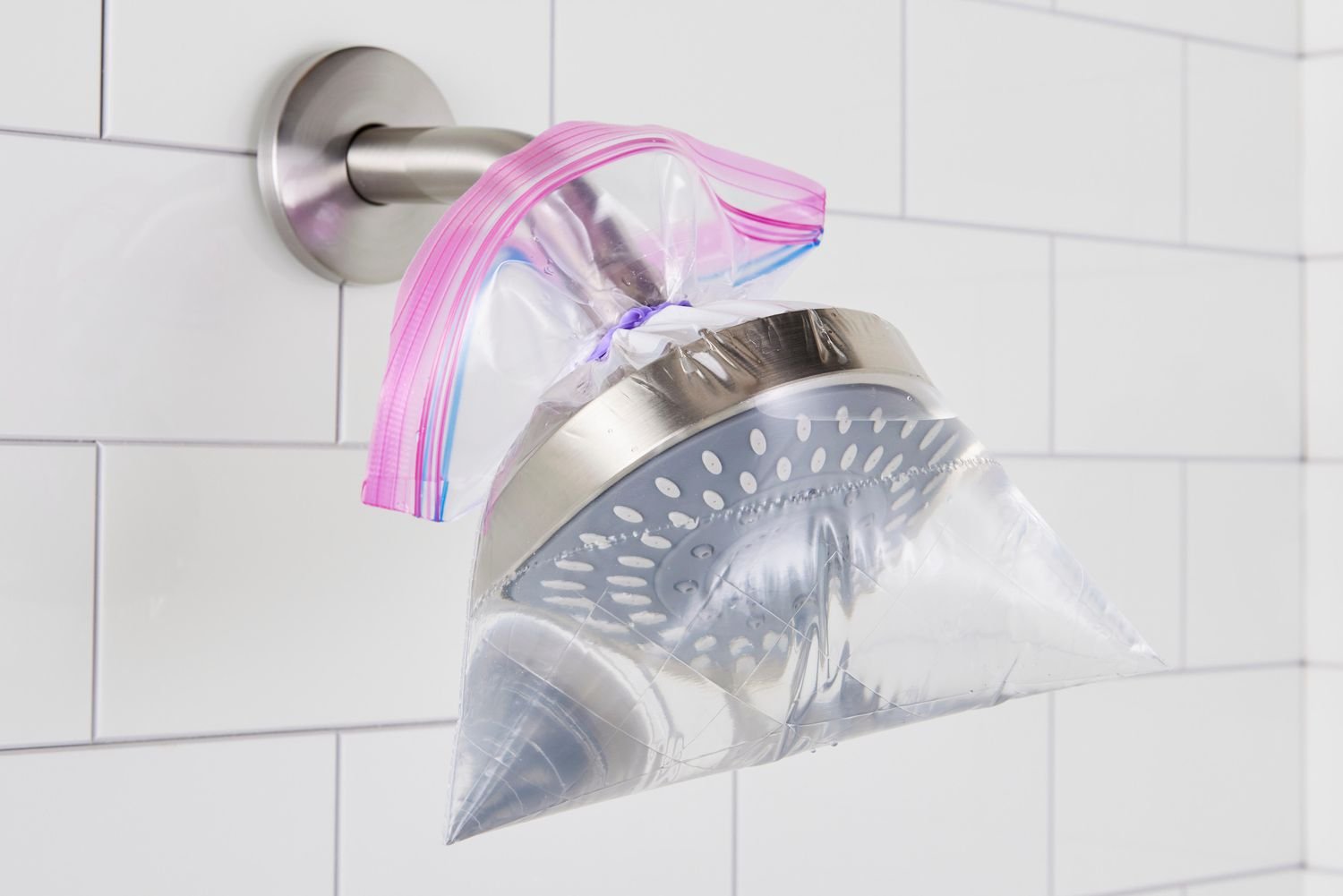
- Fill a plastic bag halfway with vinegar.
- Submerge the shower head nozzles in the bag.
- Secure with a rubber band so it doesn’t leak.
- Soak 30 minutes (light buildup) to overnight (heavy buildup).
- Remove, run hot water through it for a minute, then wipe clean.
Method 2: Detachable / Handheld Shower Head
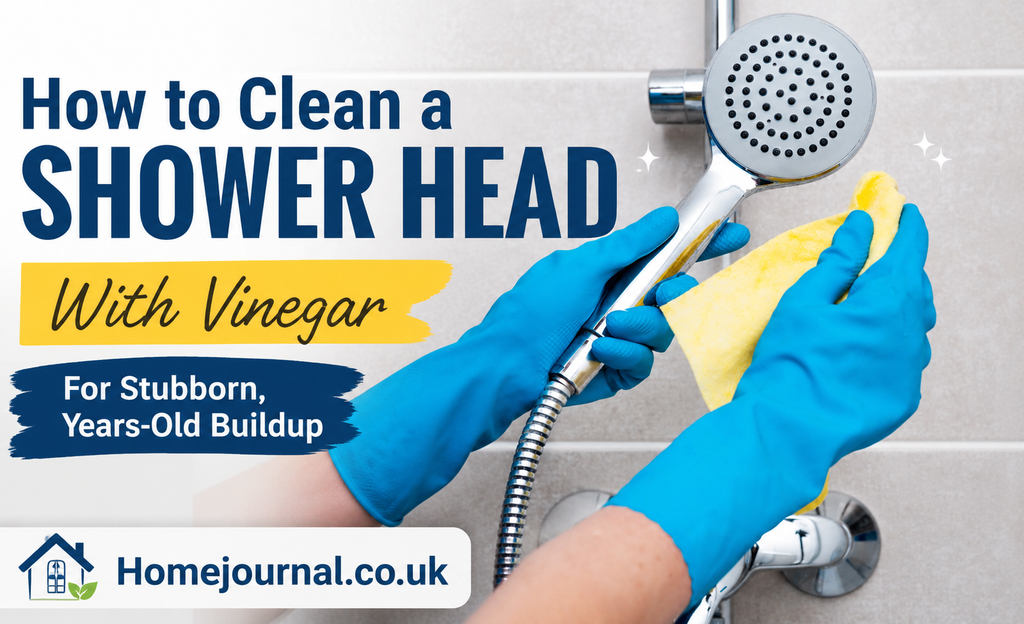
- Unscrew the shower head from the hose.
- Submerge it fully in a bowl of vinegar.
- Soak 30 minutes to a few hours.
- Scrub gently with an old toothbrush.
- Rinse well before reattaching.
For Stubborn, Years-Old Buildup
- Warm the vinegar slightly before soaking — heat speeds things up
- Make a vinegar + baking soda paste for visible crust
- Repeat the soak if the first round doesn’t fully clear it
- Gently poke blocked holes with a toothpick, never force it
Is Vinegar Safe for Your Shower Head’s Finish?
| Material | Safe Soak Time |
|---|---|
| Chrome / stainless steel | Safe for hours, even overnight |
| Brushed nickel / bronze | Under 1 hour to protect the coating |
| Plastic | Safe, but avoid very frequent long soaks |
| Matte black | Under 1 hour — test a small spot first |
Prevent Future Buildup
- Wipe the shower head weekly with a vinegar-damp cloth
- Do a full soak every 4–6 weeks
- Dry it after each use
- Consider a water softener if you have hard water
Mistakes to Avoid
- Don’t use colored vinegar — it can stain grout
- Always rinse well to avoid lingering smell
- Don’t over-soak coated or matte finishes
- Don’t scrub hard — it can damage rubber jets
FAQs
Q1. Does vinegar damage shower heads?
No, not for short-to-medium soaks. Just rinse promptly, especially on coated finishes.
Q2. How often should I clean it?
Every 4–6 weeks for most homes; every 2–3 weeks if you have hard water.
Q3. Can I use apple cider vinegar instead?
Stick with white vinegar — it won’t stain your fixtures or grout.
Conclusion
A clogged shower head is one of the easiest bathroom problems to fix yourself. Grab some vinegar, follow the soak method that matches your shower head, and you’ll have strong water pressure back within the hour. Give it a try tonight — your shower will thank you.
