

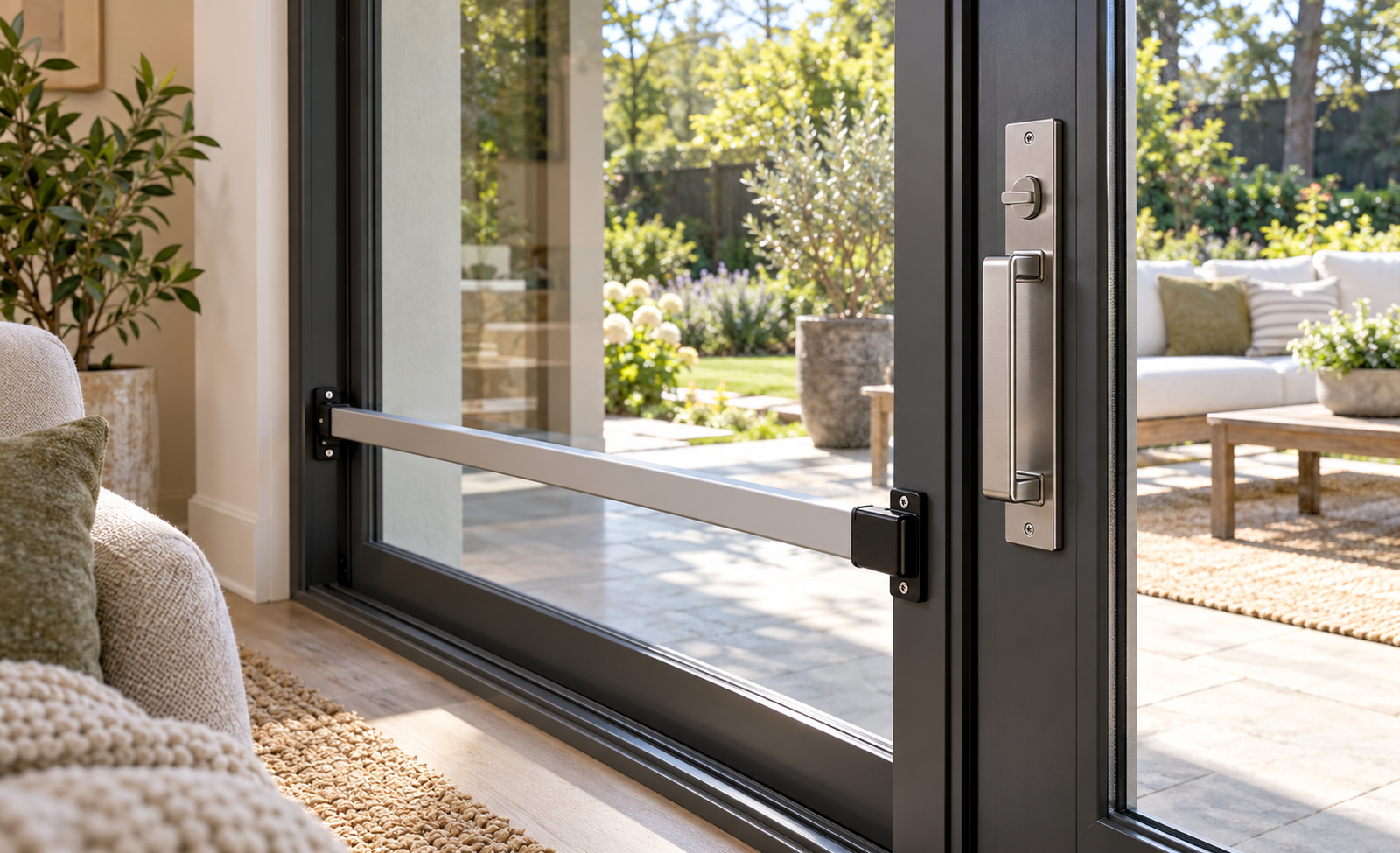
Quick answer: To secure sliding doors, fix any lock or alignment problems, add a compatible security bar, and check for anti-lift protection. Inspect the frame and fixed panel, then consider glass protection and an opening sensor. All security devices should allow a quick exit from inside.
A sliding door that looks closed may still have a latch that has not caught properly. Loose hardware, worn rollers, and damaged frames can also weaken security. The best starting point is to find the actual problem before spending money on accessories.
This guide explains how to secure sliding doors through practical fixes, including options for renters. Start with the section that matches your door’s condition, then build additional protection around a reliable lock and sound frame.
1. Check Whether the Door Actually Locks
Close the door completely, engage the lock, and gently try to slide it open. The latch should hold without needing to lift the handle or push the panel sideways.
Look for these warning signs:
- The handle locks, but the panel still opens.
- The latch catches only after several attempts.
- The handle or keeper plate feels loose.
- The panel sits unevenly against the frame.
The fix: Identify whether the problem involves the latch, keeper, or door alignment. Tighten accessible loose hardware only according to the manufacturer’s instructions. If the mechanism is worn or damaged, arrange a compatible replacement.
Do not rely on an additional bar as a permanent substitute for repairing a defective main lock.
2. Fix Dragging and Misalignment

A door that scrapes along its track may struggle to meet the locking point correctly. Dirt, worn rollers, or an uneven panel can affect both everyday operation and reliable locking.
Remove loose debris from the track and clean it using the manufacturer’s recommended method. Avoid applying random oils or grease, which may be unsuitable for the components.
Call a door technician if:
- Cleaning does not improve movement.
- The panel tilts or rattles noticeably.
- The latch engages only when you lift the door.
- The track is bent or damaged.
Heavy glass panels are difficult to handle safely. Avoid removing the panel yourself unless you have the necessary skills and equipment.
3. Add a Sliding Door Security Bar

A compatible security bar creates a physical stop that restricts the moving panel from sliding open. Depending on the design, it sits in the interior track or mounts across the opening.
Measure carefully and check compatibility before buying. The bar should fit securely without pressing against glass or fragile trim.
Pros:
- Simple to operate.
- Does not require electricity.
- Removable options suit some rental properties.
Cons:
- Must be positioned correctly.
- Does not strengthen the glass.
- Floor-level designs can be difficult for some people to reach.
A wooden dowel can provide a basic track stop on suitable doors, but it should not be brittle, loosely fitted, or difficult to remove. Always confirm that everyone in the home can release the restraint easily.
4. Check for Missing Anti-Lift Protection
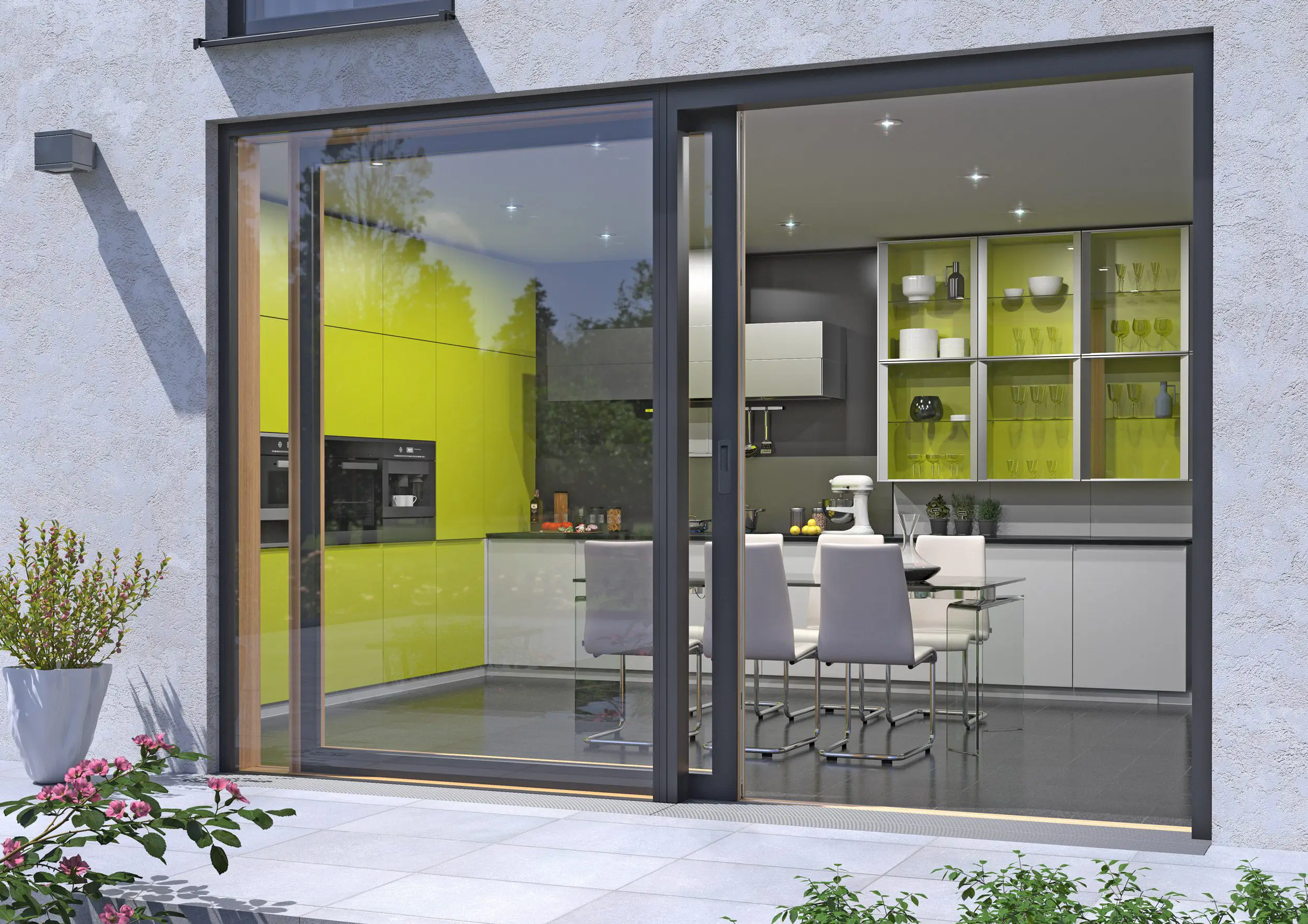
A security bar restricts sideways movement, but that is different from keeping the panel retained in its track.
Police.uk recommends checking that sliding patio doors have an anti-lift device to prevent them being lifted out of the frame.
The fix: Ask the manufacturer or a qualified installer whether your door has built-in anti-lift protection and whether its components are correctly fitted.
Avoid generic advice to drill screws into the upper track. Incorrect placement can interfere with normal operation or damage the door. Use components approved for the specific door system.
5. Inspect the Frame and Fixed Panel
A strong lock cannot compensate for a deteriorated frame. Check the surrounding structure and the stationary glass panel, which is easy to overlook during a security inspection.
Watch for:
- Cracked or rotting timber.
- Loose fixed-panel retainers.
- Movement around the frame.
- Damaged mounting points.
- Corroded or missing hardware.
The fix: Repair structural problems before installing extra locks. If the frame or fixed panel moves unexpectedly, have it inspected rather than repeatedly testing it.
A secondary patio lock may provide another restraint, but it needs a suitable mounting surface. Never assume longer screws are safe near glazing or concealed frame components.
6. Address Vulnerable Glass

Security film and laminated glazing are options to discuss with a glazing professional. Neither should be described as making a door unbreakable.
Suitable security film systems can help retain broken glass and may delay entry. Performance depends on the film, glass, installation, and any required attachment system. For example, 3M specifies attachment requirements for certain security applications and states that its films are not designed to stop intruders.
Before paying for an upgrade, ask:
- Is the product compatible with this glass?
- What tested performance does the complete system provide?
- Is frame attachment required?
- Will installation affect the warranty?
If the existing frame and door are already deteriorating, compare replacement costs before investing heavily in glass improvements.
7. Add an Opening Sensor for Alerts
An opening sensor can notify you when the panel moves. It adds awareness but does not physically prevent entry.
Check how the device operates before installation. Some sound a local alarm, while others send notifications through a connected hub or app.
Useful features to compare include:
- Low-battery warnings.
- A clearly audible local alert.
- Reliable notification delivery.
- Operation during an internet outage.
- Any subscription requirements.
Test the sensor after installation. Remember that a “closed” reading usually means the sensor components are together; it does not necessarily confirm that the door is locked.
8. Choose Practical Options for Rental Homes
If you cannot drill into the frame, a compatible removable security bar may be a useful option. An adhesive opening sensor can also provide alerts without permanent hardware.
However, small adhesive childproofing accessories should not automatically be treated as burglary-resistant locks.
For renters:
- Report defective locks and loose panels to the landlord.
- Check permission requirements before applying film.
- Follow adhesive installation and removal instructions.
- Choose removable equipment that fits the door properly.
For example, a renter with a working latch could add a suitable removable bar. If the latch does not engage, the repair should still be requested rather than hidden by the extra accessory.
9. Keep Emergency Escape Easy
Every upgrade should preserve a straightforward exit. Avoid arrangements that require searching for a key, finding a tool, or struggling with several unfamiliar devices.
The National Fire Protection Association advises choosing quick-release security bars and making sure everyone in the home can operate them. Exits should open easily from inside.
Consider accessibility too. A low track bar may be difficult for someone with limited mobility, while a high bolt may be out of reach.
Ask your local fire department or building authority about requirements if an installation could affect an escape route.
10. Prioritize the Fix That Solves Your Problem
Use this checklist to decide where to start:
| Problem | First action |
|---|---|
| Latch does not catch | Inspect the lock and alignment |
| Door drags or tilts | Clean the track and arrange roller assessment |
| No additional opening restraint | Check compatibility with a security bar |
| Anti-lift protection is uncertain | Ask the manufacturer or installer |
| Frame or fixed panel is loose | Arrange professional repair |
| You want opening alerts | Add and test a compatible sensor |
Close and lock the door fully before leaving home or going to bed. An ordinary insect screen or a partly open ventilation position should not be treated as equivalent to a secured door.
FAQ’s
Q1. What is the simplest way to improve sliding door security?
Start with a working main lock, then add a compatible security bar. Also check the frame, fixed panel, and anti-lift protection.
Q2. Can I secure a sliding door without drilling?
Yes. A suitable removable security bar can restrict opening without permanent installation. An adhesive sensor can add alerts.
Q3. Is a security bar enough on its own?
No single device addresses every weakness. A bar limits sliding movement, but glass, frame condition, and panel retention still need attention.
Conclusion
The best way to secure a sliding door is to fix its weakest point first. Repair unreliable locking, correct alignment problems, and check the frame before adding compatible security hardware.
