

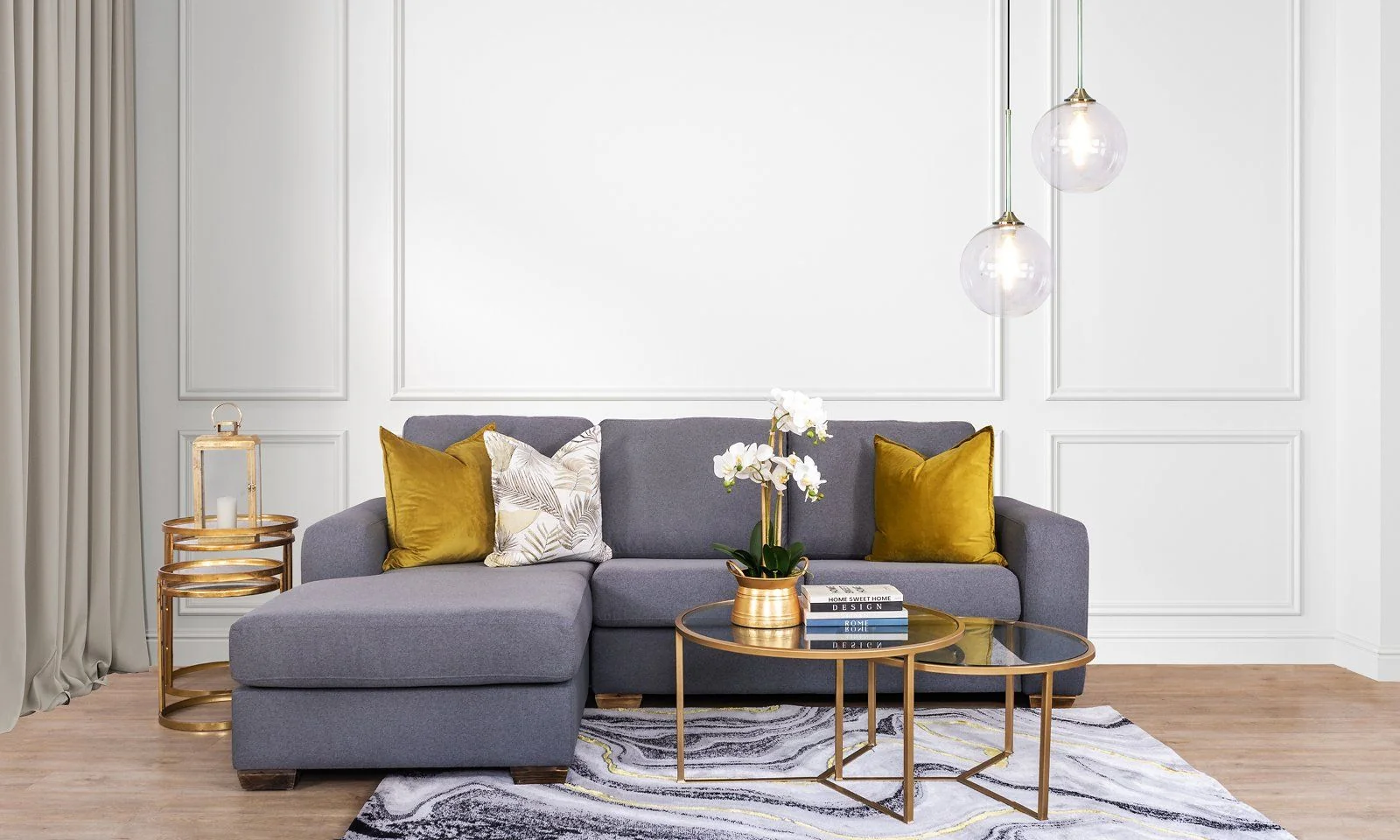
Fitting an L-shaped sofa into a compact living room might sound like a design contradiction — but it isn’t. A small l shaped couch can actually make a tight room feel bigger, more organized, and far more functional than a bulky traditional sofa-and-loveseat combo.
In this guide, you’ll find 15 real-world layout ideas, a practical buying checklist, honest pros and cons, and answers to the questions people ask most before buying one. Whether you’re furnishing a studio apartment, a narrow living room, or a cozy den, there’s a configuration here that will fit.
Why a Small L-Shaped Couch Works So Well in Tight Rooms
Most people assume sectionals need a big room. In reality, a small L-shaped couch is often the smarter choice for compact spaces, not the riskier one.
- It hugs the wall instead of floating in the middle, freeing up open floor space for walking and other furniture.
- The chaise section doubles as extra seating or a lounging spot, replacing the need for a separate armchair or ottoman.
- Corner placement uses “dead space” that a straight sofa usually leaves empty.
- It visually anchors the room, giving even a small layout a clear sense of purpose and flow.
Interior designers frequently point out that a well-scaled sectional can make a room feel more finished than two smaller pieces scattered around, simply because it reduces visual clutter.
What to Look for When Buying a small l shaped couch
Before you shop, it helps to know exactly which features matter for small spaces. Here’s what actually makes a difference:
- Overall footprint: Look for models under 80–90 inches on the longest side; anything larger starts to overwhelm a small room.
- Reversible chaise: A couch with a chaise that can switch sides gives you flexibility if you rearrange later or move apartments.
- Track or slim arms: Thin, low-profile arms save several inches of usable width compared to rolled or oversized arms.
- Leg height: Sofas with visible legs (rather than a skirted base) make a room feel more open because light passes underneath.
- Modular options: Some small L-shaped couches come in separate modules, which makes moving them through narrow doorways much easier.
- Removable/washable covers: Practical for small households where the sofa gets daily heavy use.
15 Stylish Small L-Shaped Couch Ideas

1. Corner-Hugging Compact Sectional
A tight, boxy L-shape pushed directly into a corner is the most space-efficient layout for micro apartments, leaving the rest of the room open.
2. Reversible Chaise Sofa for Flexible Layouts
Choose a model with a reversible chaise so you can flip the orientation whenever you rearrange the room or move.
3. Apartment-Sized L-Shape Under 75 Inches
Scaled-down sectionals built specifically for apartments keep proportions tight without sacrificing comfortable seating depth.
4. Sleeper L-Shaped Couch for Multi-Use Rooms
A pull-out chaise sleeper is ideal for studios where the living room doubles as a guest room.
5. Low-Profile Scandinavian Style
Slim arms, tapered wooden legs, and a low back keep the silhouette light and airy — a favorite for minimalist small spaces.
6. Velvet Curved-Arm Mini Sectional

A curved-arm L-shape in velvet adds softness and a touch of luxury without adding visual bulk.
7. Modular Two-Piece L-Shape
Two separate modules that combine into an L-shape make transport through narrow stairwells or hallways much easier.
8. Bouclé Textured Corner Sofa
The rounded, textured look of bouclé fabric works beautifully in small rooms because it softens hard corners.
9. Dark Leather Compact Sectional
A smaller leather L-shape reads as sleek and grounded, especially in rooms with light walls and flooring.
10. Convertible Storage Chaise Sofa
A chaise with hidden storage underneath is a practical pick for small apartments that need extra room for blankets or linens.
11. Slim Track-Arm Sectional for Narrow Rooms
Track arms shave off inches on either side, making this ideal for long, narrow living rooms.
12. Two-Tone L-Shaped Couch
Mixing two complementary fabric tones on the base and chaise adds visual interest without needing a larger footprint.
13. Petite L-Shape for Studio Apartments
Designed at true “apartment scale,” these sit lower and shorter than standard sectionals, ideal for open-plan studios.
14. Boho Rattan-Trim Corner Sofa

Woven rattan detailing on the base or legs brings texture and warmth, popular in small, plant-filled living rooms.
15. Compact L-Shape with Adjustable Backrest
Sofas with a reclining or adjustable backrest section add functionality without requiring a separate recliner chair.
Pros and Cons of a Small L-Shaped Couch
Pros:
- Maximizes corner space that would otherwise go unused
- Provides more total seating than a same-sized straight sofa
- Anchors a room and reduces the need for extra chairs
- Many modern models come with storage or sleeper functionality
- Available in flexible, reversible configurations
Cons:
- Can feel bulky if the room is under roughly 120 square feet
- Harder to reposition later than a simple two-seat sofa
- Chaise section may block walkways in narrow layouts
- Fewer size options compared to standard straight sofas
- Delivery and doorway clearance need extra planning
Where to Place a Small L-Shaped Couch (Layout Tips)

Placement matters just as much as the couch itself. A few practical guidelines:
- Anchor it to the shortest wall near a corner so the chaise doesn’t cut into your main walking path.
- Leave at least 30 inches of clearance for walkways around the longest side.
- Float it slightly off the wall in larger small rooms (10×12 feet or more) to create a cozier, more layered feel.
- Pair it with a round or oval coffee table instead of a rectangular one — it softens the room’s angles and improves flow.
- Use a rug that extends under the front legs to visually ground the seating area.
Best Materials and Fabrics for Small Spaces
- Performance fabric — stain-resistant and family-friendly, ideal for daily use
- Bouclé and chenille — textured, cozy, and forgiving of small imperfections
- Leather or faux leather — easy to wipe down, reads as sleek in tight rooms
- Linen blends — breathable and casual, though less stain-resistant
- Velvet — adds richness but shows wear patterns faster in high-traffic homes
Budget Ranges to Expect
- Under $600: Compact, flat-pack, or modular options; good for renters and first apartments
- $600–$1,200: Mid-range with better frame construction and fabric options
- $1,200+: Premium materials, reversible/modular engineering, and longer warranties
Spending more usually buys you a sturdier hardwood or metal frame, higher-density foam, and better warranty coverage — all of which matter more in small spaces where the sofa gets used constantly.
Care and Maintenance Tips

- Vacuum weekly to prevent dust and pet hair buildup in seams
- Rotate and flip cushions monthly for even wear
- Spot-clean spills immediately using a fabric-appropriate cleaner
- Use arm covers or throws in high-contact areas to extend fabric life
- Check and tighten leg hardware every few months, especially with modular pieces
2026 Trends in Small-Space Seating
Sofa brands have leaned further into apartment-friendly design this year: modular pieces that ship in smaller boxes, curved silhouettes that soften small rooms, and warm neutral or tonal color palettes that make compact spaces feel calmer rather than crowded. Reversible chaise sections have also become close to standard on apartment-scale sectionals, reflecting how often renters move.
FAQs
Q1: How small can a room be and still fit an L-shaped couch?
A: Most small L-shaped models work well in rooms as compact as 10×10 feet, as long as you leave clear walking paths around the chaise.
Q2: Is an L-shaped couch better than a regular sofa for small apartments?
A: It often is, since the chaise section replaces a separate chair and the corner placement frees up more open floor space than a straight sofa plus extra seating would.
Q3: Can I change the direction of the chaise later?
A: Only if you choose a reversible model — check this feature before buying, since not all small L-shaped couches allow it.
Conclusion
A small L-shaped couch isn’t a compromise — it’s often the smartest seating decision you can make in a compact room. By choosing the right scale, a reversible or modular design, and a layout that respects your walkways, you can get a comfortable, stylish sectional that makes your space feel larger, not smaller. Ready to find the right fit? Measure your room, shortlist two or three of the styles above, and bring swatches home before you commit — your future self (and your living room) will thank you.
