

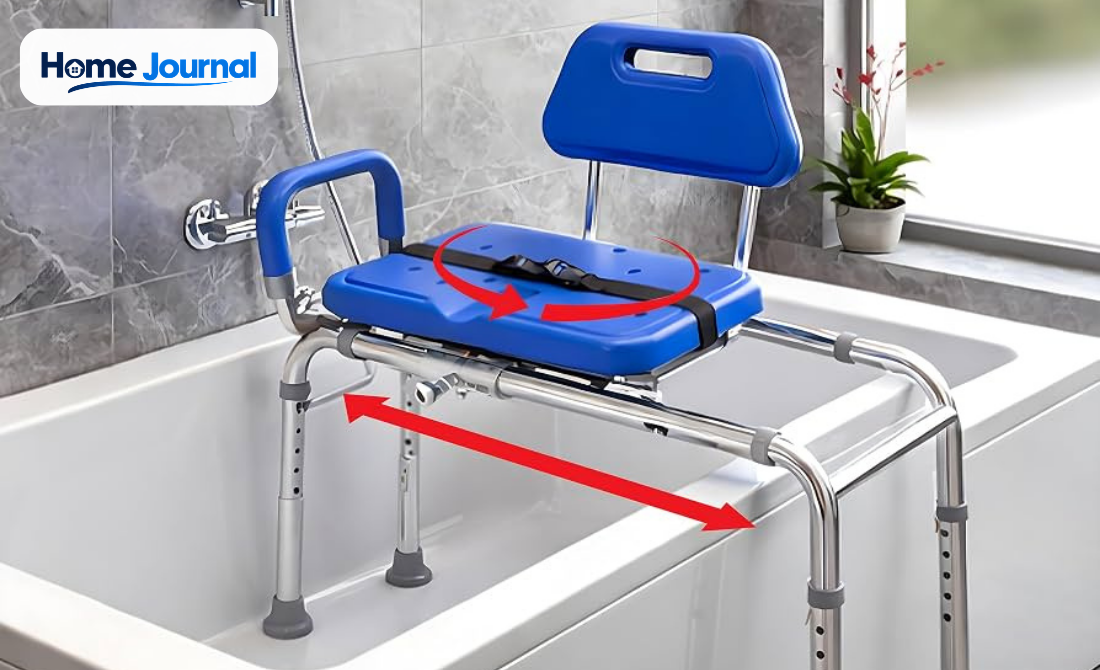
A sliding shower chair can make bathroom transfers easier, more comfortable, and more manageable for people who have difficulty standing or moving safely in the shower. Unlike a basic shower seat, a sliding model allows the seat to move along a support system, which can make transferring into the shower less complicated.
Choosing the right chair is not only about comfort. Size, weight capacity, stability, locking mechanisms, bathroom space, and ease of use all matter. This guide explains the main types, important safety features, benefits, drawbacks, and practical buying tips so you can choose a chair that fits your needs and bathroom setup.
What Is a Sliding Shower Chair?
A sliding shower chair is a bathroom transfer seat designed to move along rails or a frame. The user can sit on the chair before sliding toward the shower area instead of taking several steps while standing.
Some models are designed mainly for shower transfers, while others may combine shower, toilet, and mobility functions. The exact design varies, so always check the manufacturer’s instructions and measurements before buying.
How Does a Sliding Shower Chair Work?
Most sliding chairs use a seat attached to a frame, track, or transfer system. After the user sits down, the seat can move toward the shower and then lock into position.
The locking system is especially important. A chair should remain stable when someone is transferring or showering. Users and caregivers should check that the mechanism is fully engaged before use.
Types of Sliding Shower Chairs
Different bathroom layouts may require different designs. Common options include:
- Sliding transfer benches: Designed to help move a person from outside the shower to the inside.
- Rolling shower chairs: Use wheels and may provide greater mobility in larger bathrooms.
- Swivel-transfer chairs: Allow the seat to rotate before moving into the shower.
- Bariatric models: Built with higher weight capacities and wider seating.
- Compact or foldable models: Useful where bathroom space is limited.
The best type depends on the available space, transfer method, and level of support needed.
Key Safety Features to Look For
Safety should be one of the first things you compare when choosing a sliding shower chair.
Look for features such as:
- Secure locking mechanisms
- Non-slip seating surfaces
- Adjustable height
- Strong and stable frames
- Supportive armrests
- Comfortable back support
- Appropriate weight capacity
- Non-slip feet or locking casters
- Rust-resistant materials
- Easy-to-clean surfaces
A chair can have many features, but stability and correct fit should remain priorities.
How to Choose the Right Sliding Shower Chair
Before buying, measure your bathroom carefully. Check the width of the shower opening, the distance between the toilet and shower, floor space, and door clearance.
You should also compare the chair’s seat width, seat height, overall length, and maximum weight capacity. A model that fits the user but does not fit the bathroom can quickly become frustrating.
Consider who will operate the chair, too. A simple locking and sliding system may be easier for both the user and caregiver than a complicated design.
Sliding Shower Chair Pros and Cons
Pros
- Can make seated transfers easier
- Reduces the need for unnecessary standing
- May provide better support than a basic shower stool
- Can improve caregiver access
- Useful for accessible bathroom setups
- Available in different sizes and designs
Cons
- Usually costs more than a standard shower chair
- Some models require more bathroom space
- Incorrect measurements can cause fit problems
- Sliding and locking parts need regular inspection
- Not every design works with every shower layout
Sliding Shower Chair vs. Regular Shower Chair
| Feature | Sliding Shower Chair | Regular Shower Chair |
|---|---|---|
| Transfer support | Designed for easier transfers | Limited |
| Movement | Seat can slide or move | Usually stationary |
| Bathroom space | May require more space | Often more compact |
| Caregiver access | Can be easier | Depends on design |
| Cost | Often higher | Usually lower |
| Main purpose | Transfer and shower access | Seated showering |
A regular shower chair may be enough for someone who can safely walk into the shower. A sliding transfer model may be more practical when seated transfer support is needed.
Common Buying Mistakes to Avoid
One of the biggest mistakes is buying a chair without measuring the bathroom. A product may look compact online but require more clearance than expected.
Another common mistake is ignoring the weight limit. Always select a model with a suitable capacity and follow the manufacturer’s specifications.
It is also important not to focus only on padding or appearance. A comfortable seat is useful, but secure locks, stable construction, correct dimensions, and easy operation are more important for everyday use.
How to Use a Sliding Shower Chair Safely
Follow the manufacturer’s instructions every time you use the chair. In general, make sure the chair is positioned correctly and that the locking mechanism is engaged before transferring.
Move slowly and avoid sudden movements. Keep the bathroom floor as dry as possible, and use the chair’s handles or armrests when provided.
Caregivers should also make sure the chair is fully locked before the user begins showering. Never exceed the manufacturer’s stated weight capacity.
Cleaning and Maintenance Tips
Regular cleaning helps keep a sliding shower chair comfortable and functional. Rinse away soap and shampoo residue after use, especially around moving parts.
Inspect the frame, bolts, wheels, tracks, locks, handles, and seat regularly. Look for loose hardware, cracks, rust, or unusual movement. If a safety mechanism does not work properly, stop using the chair until it has been checked according to the manufacturer’s guidance.
Who May Benefit From a Sliding Shower Chair?
A sliding shower chair may be useful for people who have difficulty standing, walking, or stepping safely into a shower. It can also be helpful when a caregiver needs to assist with bathroom transfers.
Potential users include older adults, wheelchair users, people with temporary mobility limitations, and anyone who needs additional support during shower transfers.
However, bathroom equipment should be selected based on the individual’s needs and the bathroom environment. Professional advice may be appropriate when transfer safety is a concern.
What Should You Check Before Buying?

Use this quick checklist:
- Measure the shower and bathroom area.
- Check seat width and height.
- Confirm the maximum weight capacity.
- Look for reliable locking mechanisms.
- Consider armrests and back support.
- Check whether the chair fits your toilet and shower layout.
- Review cleaning and maintenance requirements.
- Consider whether the user or caregiver can operate it comfortably.
- Read the manufacturer’s installation and safety instructions.
FAQs
Q1. What is the main purpose of a sliding shower chair?
It helps make seated transfers into and out of a shower easier by allowing the seat to move along a support system.
Q2. Are sliding shower chairs safe?
They can provide useful transfer support when correctly fitted and used, but safety depends on proper installation, secure locking, suitable weight capacity, and correct use.
Q3. How do I choose the right sliding shower chair?
Start by measuring your bathroom, then compare the chair’s dimensions, weight capacity, stability, transfer design, comfort, and ease of operation.
Conclusion
The right sliding shower chair can make a bathroom more accessible and help simplify shower transfers. When comparing models, focus on stability, measurements, weight capacity, locking features, comfort, and ease of use rather than appearance alone.
